
As a dental practice that offers both dental implants and dentures, we’re often asked about the best ways to go about replacing missing teeth. The you explore with our West Michigan dentists will ultimately depend on your oral health, budget, and personal preference.
Here are the differences between getting dentures and single-tooth dental implants. If you’d still like more information, our dentists would be happy to answer any questions you may have about either procedure.
Dentures
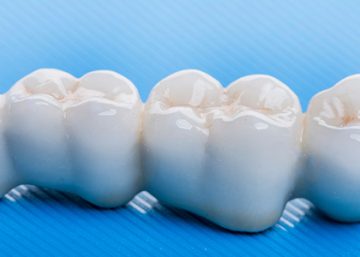
Removable dentures are made to look and function like natural teeth. We can help you explore the different available, including partial, complete, conventional, and immediate dentures.
Depending on the extent of tooth loss, our local denture dentists may recommend a full or partial option. While full dentures replace an entire arch of teeth, partial dentures only replace a few teeth.
New dentures sit on top of your gums and must be removed before you go to sleep so your gums have a chance to recover. When you’re not wearing your dentures, they’ll need to be submerged in a glass of water or denture cleanser, so they don’t dry out, crack, and warp.
The benefits of dentures include:
- Custom-made: Dentures are not one-size-fits-all oral appliances. Our dentists tailor both partial and full dentures to fit your mouth comfortably.
- Restored self-confidence: There’s no need to hide your smile around family, friends, or co-workers after you’ve filled in the gaps in your smile.
- Removable: If you don’t like the idea of having a permanent solution, you can remove your dentures but make sure they’re cared for when not in use.
- Facial feature support: Wearing dentures helps to fill out your cheeks that may have begun to sag after teeth were lost.
Dental Implants
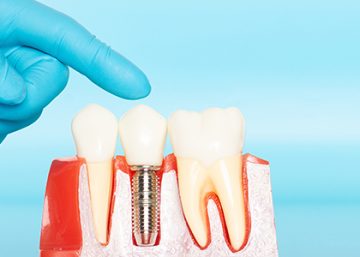
Unlike dentures, dental implant surgery involves the placement of titanium posts directly into the jawbone which over time, provides much needed stimulation to the area. Our dental implant dentists will then ask you to return months later after healing is complete to have the abutment (connector piece) and porcelain dental crown placed.
Tooth implants do not rely on adhesives or clasps for stability but instead fuse to your jaw in a process called osseointegration. Though patience is required for this step, it eliminates the common issue of denture slippage, providing wearers with a more secure and comfortable experience.
While single-tooth implants provide numerous benefits, it’s also important to acknowledge certain considerations. For one, surgery is involved, and some individuals may have concerns about this aspect. Additionally, dental implants are more of an investment than dentures. However, many individuals find that the long-term advantages outweigh the “drawbacks”.
The benefits of dental implants include:
- Enhanced ability to speak and eat
- Improved self-esteem and overall comfort
- Natural stimulation of jawbone which prevents further bone and tooth loss
- Look and function like natural teeth which makes maintenance easier
- Permanently remain in place (no risk of slipping or shifting)
- Adjacent teeth do not need to be altered for support
Should I Get Dentures or Dental Implants?
While dentures are more affordable than dental implants, they don’t solve the problem of jawbone deterioration.
As soon as your body detects a missing tooth, it’ll start to absorb the minerals in your jaw to use elsewhere. Once this happens, the area of the jaw where the tooth root used to be weakens and deteriorates. Teeth adjacent to the gap will also start to tilt toward the open space. Eventually, the patient may experience facial collapse, which alters the shape of the face and makes it difficult to wear dentures.
The best way to prevent further tooth loss and jawbone deterioration is to ask our dentists if you’re right for the . In general, we recommend dental implants whenever possible so patients can avoid long-term health issues caused by missing teeth.
Am I a Candidate for the Dental Implant Procedure?
You’re a candidate for the dental implant procedure if you have healthy gum tissue and sufficient bone density in your jaw to place the implant. For successful osseointegration, there must be enough jawbone tissue to support the titanium dental implant that’s placed in your jawbone. It is worth noting that dental bone grafting is an option if more support is needed in the area of the jaw set to receive the implant.
Other factors that can ultimately influence what is chosen include:
- Commitment to oral hygiene
- Medical conditions that may interfere with proper healing
- Number of teeth missing
- Habits like smoking or use of other tobacco products
Be sure to also consider your diet, social activities, maintenance commitment, and how you want your teeth to look and feel. Dental implants might offer the most natural experience, but the initial cost and surgery are significant things to keep in mind. Dentures provide a quick and cost-effective solution but might not meet the needs of an active lifestyle.
Implant-supported dentures strike a balance between the two, offering improved stability without the full commitment of many individual implants.
Our dentists will ultimately be able to determine if you’re fit for this option during a dental implant consultation. Even if you’re not a candidate for dental implants, we can help you explore your other tooth replacement options.
Schedule a Consultation Today
Our are proud to offer multiple forms of dental restoration that help patients smile with confidence. Whatever you choose, we’ll make sure you love the end result. To schedule an appointment, call one of our MI Smiles Dental locations today.
This blog post has been updated.